Podcast: Play in new window | Download (Duration: 26:50 — 17.1MB)
Subscribe: Apple Podcasts | Podcast Index | RSS
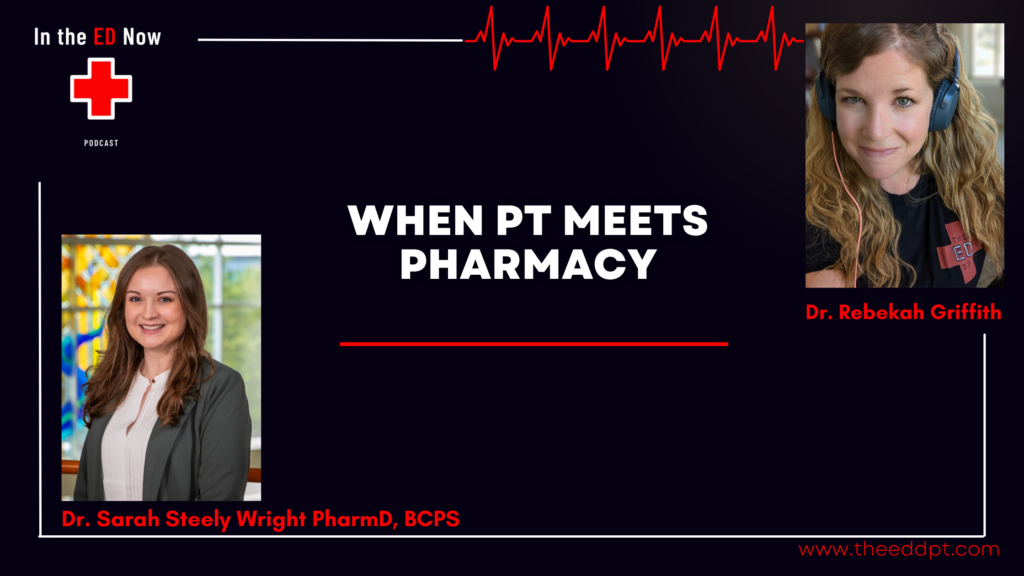
Guest: Dr. Sarah Steely Wright, PharmD, BCPS
Host: Dr. Rebekah Griffith, PT, DPT, NCS, FAAOMPT
In this episode, Rebekah sits down with emergency department pharmacist Dr. Sarah Steely Wright to explore how emergency department physical therapists and pharmacists can work together to improve patient care, reduce barriers to discharge, and practice at the top of their respective scopes. From medication reconciliation and resuscitations to fall prevention and medication-related mobility impairments, this conversation highlights just how much these professions have to gain from stronger collaboration.

What You’ll Learn
- The education, residency, and board certification pathway to becoming an emergency medicine pharmacist.
- What an ED pharmacist actually does during a typical shift—including resuscitations, stroke alerts, intubations, medication reconciliation, culture follow-up, antibiotic stewardship, and discharge planning.
- How pharmacists help solve medication allergies, insurance barriers, prescription issues, and medication access problems before patients leave the ED.
- Why medication-related adverse effects are often overlooked contributors to falls, dizziness, impaired mobility, and functional decline.
- How PTs can better identify medication concerns and know when to involve their ED pharmacist.
- Practical communication strategies for discussing medication-related concerns with physicians and advocating for patients without creating conflict.
- Common medication combinations that increase fall risk and should raise concern during a PT evaluation.
- The value of interdisciplinary teamwork in reducing unnecessary ED utilization and improving patient outcomes.
Key Discussion Topics
- The evolving role of the emergency medicine pharmacist
- Pharmacists as bedside clinicians—not just medication experts
- Polypharmacy and functional decline
- Medication effects on mobility, balance, and vestibular assessment
- Steroid allergies and selecting safe alternatives
- Insurance and discharge barriers beyond rehabilitation placement
- Substance use, supplements, and medication safety
- Building trust between PTs, pharmacists, physicians, nursing, case management, and social work
- Collaborative approaches to safer discharge planning
Top Takeaways
- Pharmacists are essential members of the ED team whose expertise extends far beyond dispensing medications.
- Medication side effects frequently influence a patient’s mobility, balance, cognition, and rehabilitation potential.
- PTs often uncover important medication information during functional assessments that may not emerge elsewhere in the patient’s evaluation.
- Early communication between PTs and pharmacists can improve safety, optimize treatment plans, and prevent avoidable complications.
- The best patient outcomes occur when every discipline practices at the top of its scope—and collaborates across traditional silos.
Memorable Quote
“It takes a team.”
Connect
If you enjoyed this episode, subscribe to In The ED Now and leave a review. Share this episode with your emergency medicine colleagues and help spread the message of practicing together at top of scope.